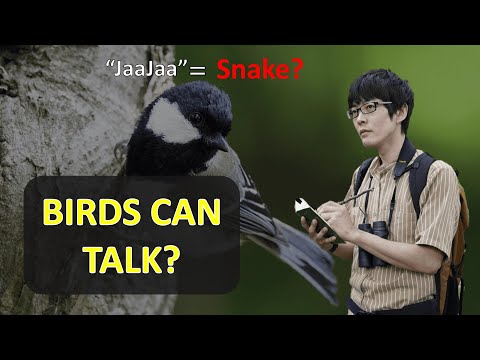
The Quranic Account and the Specific Bird, prophet from the Quran, talking with birds

The Quranic Account and the Specific Bird
The Quran (Surah An-Naml, 27:20-28) specifically mentions one bird in the context of communicating with Prophet Solomon (Sulayman in Arabic): the Hoopoe (Arabic: Hudhud).
Role: The hoopoe served as a scout, discovered the Kingdom of Sheba (ruled by Queen Bilqis), and reported back to Solomon, facilitating a conversation between them.

Significance: In the story, the hoopoe is notable for its intelligence, observational skills, and ability to convey complex information. This is a unique, miraculous event within the prophetic narrative, not a general claim about all birds of that species.
The Hoopoe Bird: Biology and Habitat
Species: The Eurasian Hoopoe (Upupa epops) is a widespread species found across Europe, Asia, and Africa.
Habitat around Tuz Lake: Yes, the Eurasian Hoopoe is a common summer migrant to Turkey, including the central Anatolian region around Tuz Lake. It frequents open countryside, grasslands, and agricultural areas—exactly the kind of habitat found there.
"Smart" Characteristics (Scientific View): Ornithologists recognize hoopoes as intelligent within the avian world. They are known for:
Complex social behaviors.

Excellent foraging skills, using their long bills to probe soil for insects.
Other "Smart" Birds of the Region (Historical & Modern Perspective)
While only the hoopoe is named in the Solomon narrative, the ancient Near East (including modern-day Turkey, Arabia, and the Levant) is home to several bird species renowned for their intelligence:
Corvids (Crows & Ravens): Universally considered among the most intelligent birds, capable of problem-solving, tool use, and complex social reasoning. They are certainly present in the region.

Parrots & Parakeets: Known for vocal mimicry. Some species, like the Alexandrine Parakeet, are native to parts of Asia and could have been known through trade.

Falcons & Eagles: Revered for their keen sight and hunting prowess, often associated with royalty and divination in ancient cultures.
Crucially: The Quran does not mention these other birds in connection with Solomon. The focus is uniquely on the hoopoe for that specific divine purpose.
4. Considering the Time of the Prophet
Prophet Solomon's Era: Biblical and Islamic tradition place Solomon in the 10th century BCE. The geographical setting is the Levant (likely modern-day Israel/Palestine, Jordan, possibly extending into northern Arabia and southern Syria).

Relevance to Tuz Lake: Tuz Lake is in central Anatolia (modern Turkey). This region was part of the Hittite sphere of influence and later various Anatolian kingdoms during Solomon's time. While not the heart of Solomon's reported kingdom, it is within the general sphere of the ancient Near East where similar bird species (like the hoopoe) were common.

Key Point: The story is not geographically constrained to a single lake. The hoopoe is a migratory bird, and the narrative of its flight to Sheba (traditionally associated with South Arabia/Yemen) highlights vast distances, consistent with its known migration patterns between Africa, Arabia, and Anatolia.
Conclusion
Yes, the specific bird from the Quranic story (the Hoopoe) is indeed found around Tuz Lake and throughout Turkey as a seasonal migrant.
In summary, the connection lies in the species identification and its historical habitat, not in measurable, statistical communication abilities. The story remains a revered religious account, while the bird itself is a common and observable part of the fauna in the regions mentioned.
Merhaba, Yabancı!
Burada yeni gibi görünüyorsunuz. Eğer katılmak istiyorsanız düğmelerden birine tıklayınız.
Kategoriler
- 7.3K Tüm Kategoriler
- 25 inviteGOD
- 1 arabic
- 0 weekly meetings
- 2 computational-Quran
- 180 advanced quran analysis
- 13 articles
- 7 yenikelime
- 0 HongKong
- 21 Faydalı Linkler
- 10 ielts map
- 7 Cantonese
- 177 generalchinesestudy
- 320 hsk1 chinese words
- 1 bitcoin
- 0 photoshop
- 7 adhd
- 860 chinese-turkish-english
- 7 psikolojik-testler
- 72 psychology
- 26 istatistiksel metodlar
- 189 ielts-writing-exercises
- 25 Germany-Almanca
- 30 fransizca-turkce
- 2 phyton
- 4.6K ingilizce-turkce
- 6 e-kitap
- 32 phrasal verbs
- 5 crime and psychology
- 21 Chess Psychology
- 39 Yazılım
- 1 Siyaset
- 2 Yaşam
- 584 Ders Notları
- 0 Haberler
- 2 Özel Forum
Yorumlar
Consistency with the Quran:
The Quran specifically names the hoopoe (hudhud) and describes a unique, miraculous communication between it and Prophet Solomon. This is framed as a divine sign and a special miracle specific to his prophethood. The text does not suggest this was a natural ability of the bird or a skill others could replicate. As you rightly noted, we do not expect other people to be able to converse with parrots or other birds because the event was a specific miracle, not a transferable linguistic skill. The miracle lies in Solomon's God-given authority to understand and communicate with the creature, not in the bird independently possessing human speech.
Consistency with History and Ornithology:
Historically and scientifically, the identification fits perfectly:
Correct Species in the Correct Region: The Eurasian Hoopoe is a common migrant across the entire ancient Near East, including the lands of Solomon (the Levant) and areas like Anatolia around Tuz Lake. The Quran accurately identifies a bird that would have been a familiar and distinctive sight in that historical era and geographical setting.
Plausible Scout Behavior: The hoopoe's natural behavior aligns with its described role. It is a ground-foraging bird that flies low over open terrain (like deserts and plains between Judah and Sheba), constantly probing the earth for insects. This makes it a plausible observational scout for finding water and unusual activity in arid regions, which fits the story's logic before the miraculous communication is applied.
Distinction from Mere Mimicry: The story differentiates itself from simple mimicry (like parrots repeating sounds). The hoopoe in the narrative conveys original, reasoned information and commentary about a distant kingdom and its people's worship. This underscores the miraculous nature of the event, as opposed to the instinctual mimicry humans can observe in some birds.
Conclusion:
The account is remarkably coherent. It uses a real, identifiable bird with natural behaviors that logically fit the scout role within the correct historical and geographical context. The supernatural element—the intelligent, two-way communication—is explicitly attributed to the unique miracle of Prophet Solomon, separating it from the natural world's observable phenomena. This careful balance between factual accuracy in the setting and the clear presentation of a prophetic sign is a point of harmony between the religious narrative and historical-zoological knowledge.
related videos: